

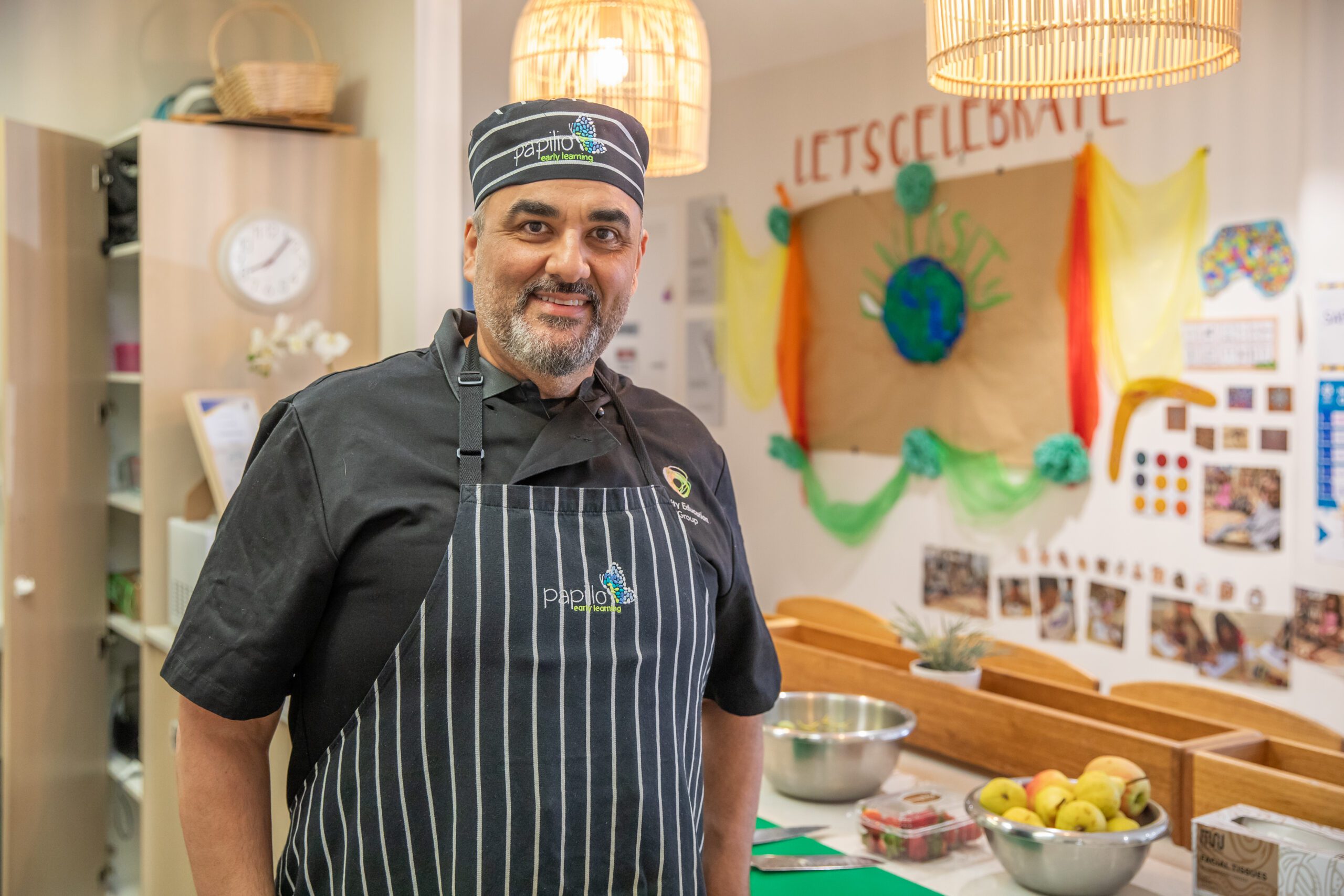

If your child is refusing foods they happily ate last week, surviving on a rotating shortlist of safe options, or treating new foods like a genuine threat, you're witnessing one of the most well-documented phases of early childhood development. Fussy eating isn't a reflection of your parenting, and it isn't permanent. At Papilio, we take an evidence-informed approach to mealtimes, one that supports children to expand their palates gradually, without pressure, and with the developmental science firmly in mind.
Understanding food neophobia - what's actually happening
The technical term for fear or avoidance of unfamiliar foods is food neophobia, and it is a completely typical feature of early childhood. Research consistently shows it peaks between the ages of two and six, and it has an evolutionary basis: as children become more mobile and independent, a degree of caution around unfamiliar foods is developmentally protective.
According to the Australian Institute of Family Studies, selective eating affects the majority of young children at some point before school age. The key insight from the research is that exposure, not pressure, is what changes eating behaviour over time. Studies suggest children may need between 15 and 20 relaxed encounters with a new food before they are willing to try it, and many more before it becomes a food they reliably accept.
Understanding this reframes the challenge. The goal at the table isn't for a child to eat everything today. It's to keep the environment positive and the exposure consistent, so that today's rejected food becomes next year's accepted one.
What we see at care, and why it often surprises families
A pattern we observe regularly at Papilio is the difference between how children eat at home versus in a group setting. It's common for families to tell us their child refuses a food at home, only to find that same child eating it happily alongside peers at care, and equally common for the reverse to be true.
Both are normal. Group mealtimes have a social dynamic that changes children's behaviour around food. Watching trusted peers and educators eat the same meal, in a calm and structured environment, reduces the anxiety that can surround unfamiliar foods. The social modelling effect is one of the more robust findings in paediatric feeding research.
If your child's appetite varies during the settling-in period, this too is expected. Emotional adjustment takes energy, and appetite often follows emotional readiness rather than leading it.
Our approach to mealtimes at Papilio
Papilio's approach to food is grounded in the evidence on how young children develop healthy, varied eating habits. Every element of how we manage mealtimes is intentional.
Fresh meals prepared on-site. Our centres cook fresh food daily. Children eat meals that are warm, varied, and prepared with whole ingredients, and the sensory cues of a freshly cooked meal (smell, appearance, texture) make a meaningful difference to how children engage with food.
Structured, repeated exposure. Our menus are deliberately diverse across proteins, vegetables, grains, and flavour profiles. We serve new and varied foods regularly, not with the expectation that children will eat them immediately, but because repeated, low-pressure exposure is the most evidence-supported pathway to dietary expansion.
Educator modelling. Papilio educators eat with children at mealtimes. Research consistently shows that children are more willing to try new foods when they observe trusted adults eating them. This isn't incidental, it's a deliberate part of how we approach the table.
A pressure-free environment. We do not use rewards or incentives to encourage eating, and we do not use language that puts children under obligation to finish their meals. The research is clear that mealtime pressure, however well-intentioned, tends to entrench selective eating rather than reduce it. Our educators are trained to maintain a relaxed, positive atmosphere regardless of what or how much a child eats.
Food literacy woven into the day. Beyond mealtimes, educators introduce food conversations into learning, exploring where ingredients come from, discussing colours and textures, and building a positive relationship with food that extends well beyond the lunch table.
Evidence-based strategies for home
The same principles that underpin our mealtime approach translate well to the home environment.
Pair the unfamiliar with the familiar. Serving a new food alongside two or three reliably accepted foods reduces the threat of an unfamiliar plate and keeps the meal from feeling like a test.
Keep serving sizes small. A teaspoon of something new is far less confronting than a full portion. Exposure is the objective, not consumption.
Involve children in food preparation. Studies consistently show that children who participate in preparing food, even in simple ways like washing vegetables or tearing herbs, are more willing to taste the end result.
Avoid creating an alternative. Preparing a separate "safe" meal when one is rejected reinforces avoidance over time. Offer the meal, keep the atmosphere calm, and allow your child to decide how much they eat.
Stay consistent and patient. Dietary expansion in young children happens over months and years, not days. Continued, relaxed exposure without pressure is the strongest predictor of improvement.
Talk to your child's educators. We observe your child at mealtimes every day and are well-placed to share what we're seeing - what they're accepting, how they're engaging, and whether there's anything worth discussing. We welcome these conversations.
When professional input is worth seeking
Most selective eating in early childhood is developmental and resolves with time and appropriate support. It's worth speaking with your GP or child health nurse if:
- Your child's weight or growth is a concern
- Their accepted food range is very narrow - fewer than 20 foods - and is reducing rather than expanding
- They experience significant distress, gagging, or vomiting around food
- You suspect a sensory processing difference may be contributing
A GP can refer you to a paediatric dietitian or specialist feeding therapist if needed.
We're here to support your whole family
Mealtimes in the early years can be genuinely stressful, and we know that food anxiety doesn't stay at the table, it follows families through the day. At Papilio, our commitment to evidence-informed practice extends to how we talk about food with families, not just how we serve it.
If you'd like to discuss your child's eating, understand more about our menu and mealtime approach, or visit a centre to see how we work, we'd love to connect.