

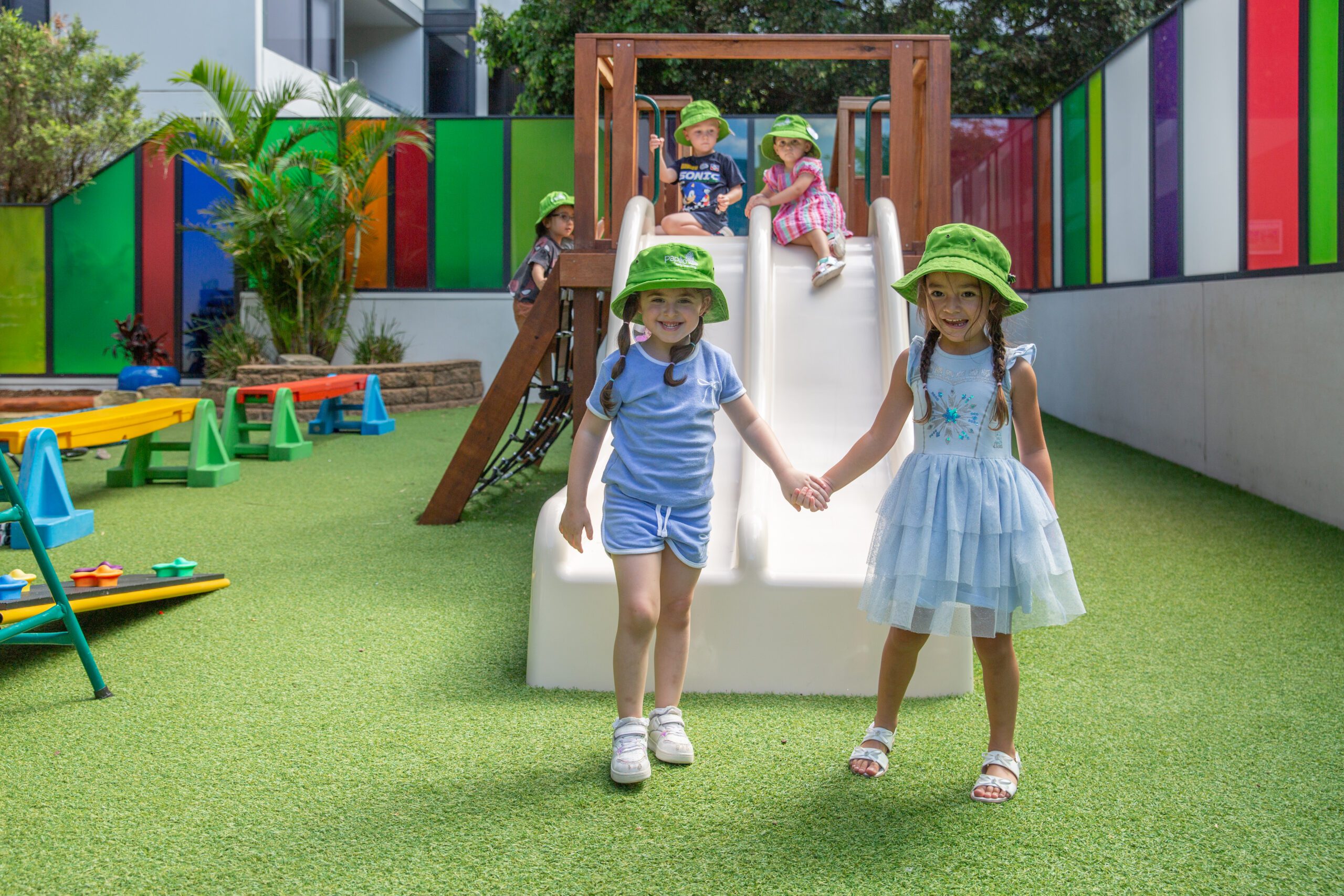

There is something beautiful about watching young children form friendships.
The tentative approach. The negotiation over who gets to be the “shop keeper.” The repair after a disagreement. The way they circle back the next day as if nothing happened.
To adults, it may look like simple play. But in those small, everyday interactions, children are building resilience. And resilience - in the early years - grows in relationship.
Resilience doesn’t start with big challenges
When we hear the word “resilience,” we often think of overcoming major obstacles.
In early childhood, however, resilience is built much more gently.
It develops when a child:
- waits for their turn
- navigates being told “not yet”
- works through frustration
- asks to join a game
- returns to play after conflict
These moments require emotional regulation, problem-solving and courage. They are foundational life skills.
The Harvard Center on the Developing Child explains that resilience is strengthened through consistent, responsive relationships that help children manage stress and develop healthy coping systems.
Before children can handle larger life transitions, like starting school, they practice resilience in social play.
Why friendships are essential to social development
Between ages two and five, children begin to move from parallel play into more cooperative, sustained friendships.
During this stage, they are learning how to:
- interpret social cues
- share ideas and materials
- express preferences
- negotiate roles
- repair relationships
The Raising Children Network notes that making friends helps preschoolers develop empathy, cooperation and communication skills, all central to wellbeing and confidence.
Friendships also nurture something deeper: belonging.
When children feel they are part of a group, they are more willing to take risks, try new experiences and recover from setbacks.
Belonging creates emotional security, and emotional security builds resilience.
Why friendships are essential to social development
Between ages two and five, children begin to move from parallel play into more cooperative, sustained friendships.
During this stage, they are learning how to:
- interpret social cues
- share ideas and materials
- express preferences
- negotiate roles
- repair relationships
The Raising Children Network notes that making friends helps preschoolers develop empathy, cooperation and communication skills, all central to wellbeing and confidence.
Friendships also nurture something deeper: belonging.
When children feel they are part of a group, they are more willing to take risks, try new experiences and recover from setbacks.
Belonging creates emotional security, and emotional security builds resilience.
When social interactions feel difficult
It’s important to acknowledge that social development is not linear.
Some children naturally step into group play. Others prefer to observe before participating. Some feel deeply when friendships wobble.
If your child finds sharing hard, becomes upset easily, or struggles to join play, this does not mean they are “behind.”
Social competence develops over time and through guided practice.
What matters most is that children have opportunities to engage in meaningful peer interactions within environments where adults thoughtfully support and scaffold those experiences.
The resilience lessons in everyday play
In a high quality early learning environment, play is never “just play.”
When a child waits for a turn, they are strengthening impulse control.
When they negotiate who gets which role in a game, they are developing flexible thinking.
When they apologise and reconnect after disagreement, they are learning that relationships can be repaired.
These early executive functioning skills underpin later academic success and emotional wellbeing. And they begin long before formal schooling.
How Papilio supports resilience through relationships
At Papilio, social and emotional development is intentionally embedded within our Lifelong Learning Curriculum.
Our educators create environments where children feel secure enough to:
- express their ideas confidently
- practise collaborative play
- navigate disagreements with guidance
- reflect on feelings
- develop empathy and perspective
We support children with language that empowers them:
“What happened?”
“How could we solve this together?”
“What might your friend be feeling?”
Rather than removing children from challenging moments, we gently guide them through those moments, building confidence, capability and connection.
Supporting friendship skills at home
Families play a powerful role in nurturing resilience.
Some simple, thoughtful practices include:
- Modelling calm responses during conflict
- Giving children language for social situations
- Allowing manageable disappointments rather than immediately intervening
- Celebrating effort (“You kept trying to join in.”)
Short, well-supported play opportunities are often more effective than long, unstructured gatherings.
Resilience grows through repeated, supported experience.
The connection to school readiness
When children transition to kindergarten or school, resilience matters as much as early literacy or numeracy.
Children who can:
- manage frustration
- collaborate with peers
- adapt to new routines
- seek help appropriately
are better equipped to engage confidently in learning.
Friendships in the preschool years are preparation for the school years ahead.
A foundation for life
Resilience is built:
- In dress-up corners
- On climbing frames
- In block towers that fall down and are rebuilt together
Each time a child navigates a social challenge and chooses to reconnect, they strengthen their ability to cope, adapt and grow.
At Papilio, we see these moments not as disruptions but as opportunities.
Opportunities to build the social confidence and emotional strength children will carry into school, into adolescence and into adulthood.
If you would like to experience how Papilio nurtures resilience and belonging through intentional early education, you can find your nearest Papilio Early Learning centre here.