

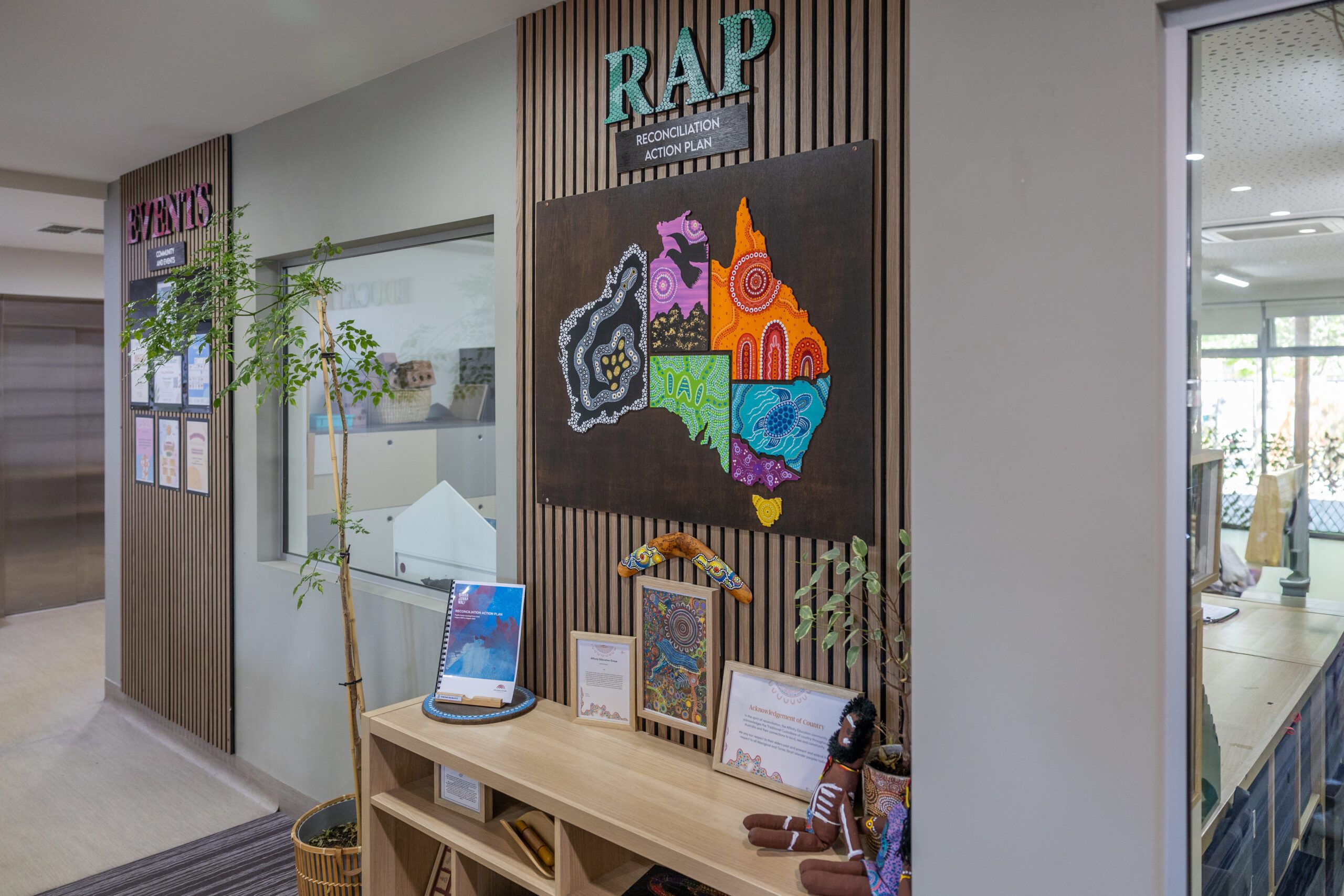

National Reconciliation Week, held each year from 27 May to 3 June, is a time for all Australians to learn about our shared histories, cultures, and achievements, and to reflect on what reconciliation requires of each of us. The 2026 theme, All In, is a call to move beyond good intentions and commit to meaningful action, every day. In early childhood education, that action begins with what we choose to teach, how we choose to teach it, and whose knowledge we recognise as worthy of a child's earliest learning.
The significance of the early years for reconciliation
Research in early childhood development consistently demonstrates that the foundations of identity, empathy, and cultural understanding are established before a child starts school. The earliest years are not too soon to begin learning about Country, culture, and shared history, they are, in fact, the most important time to do so.
When children grow up engaging with First Nations perspectives as a natural part of their learning environment, not as a special topic, but as a living thread woven through their everyday experiences, they develop a relationship with Australian history and culture that is inclusive, truthful, and grounded. This is what genuine reconciliation education looks like in practice: not a lesson delivered once a year, but a way of seeing the world that is cultivated from the very beginning.
The Wandana Aboriginal Education partnership
Papilio's engagement with First Nations learning is shaped by our partnership with Wandana Aboriginal Education. Wandana brings cultural authority, community knowledge, and genuine expertise to the work of early learning, and it is through this partnership that First Nations perspectives are embedded in the Lifelong Learning Curriculum in a way that is authentic rather than performative.
The partnership means that what children encounter in Papilio environments - the stories, the language, the art traditions, the understanding of Country - comes from the people who hold that knowledge. Wandana's educators and cultural knowledge holders guide how we approach this learning, ensuring it is handled with the care, accuracy, and respect it deserves.
We are honoured to work alongside them.
What First Nations learning looks like in Papilio environments
First Nations learning at Papilio is integrated thoughtfully across the curriculum, in ways that are age-appropriate, culturally grounded, and connected to the local Country on which each centre sits.
Children engage with storytelling traditions that are among the oldest in the world, developing an understanding of narrative, knowledge, and connection to place that extends well beyond literacy alone. They encounter art-making practices rooted in Country, exploring pattern, symbol, and meaning in ways that honour the traditions behind them. They hear and begin to use words from local First Nations languages, building an early sense of linguistic and cultural diversity. And they develop an understanding of what it means to care for Country, a concept that integrates environmental stewardship, spiritual connection, and intergenerational responsibility in ways that resonate deeply with young children.
This learning is not confined to Reconciliation Week. It is present in the room environments, the books on the shelves, the conversations educators have with children, and the way Country is acknowledged every day.
All In - what the 2026 theme asks of all of us
The 2026 theme All In calls for all Australians to commit wholeheartedly to reconciliation, not just during this week, but every single day. This year also marks Reconciliation Australia's 25th anniversary, a moment to reflect on progress made and to renew collective commitment to the work still to be done.
The campaign artwork was created by renowned Gumbaynggirr/Bundjalung artist Otis Hope Carey, in collaboration with Carbon Creative, a First Nations-owned and operated marketing and creative agency, itself a demonstration of what All In looks like in practice: ensuring that First Nations creators and businesses are central to, not peripheral to, the work of reconciliation.
For Papilio families, All In might look like:
- Acknowledging Country together as a family, and exploring whose Country you live and learn on
Seeking out books, art, and stories by First Nations creators to share at home - Attending a local Reconciliation Week event or cultural experience
- Asking your child what they've been learning about Country and culture at Papilio, and listening carefully to what they share
- Considering how your own family can be all in beyond this week
Reconciliation as an ongoing commitment
National Reconciliation Week is a moment of focus in a longer, continuous journey. At Papilio, we take seriously our responsibility to ensure that First Nations perspectives are embedded genuinely and respectfully in everything we offer children, not as an obligation to be met, but as a recognition that Australian children deserve an education that reflects the full depth and complexity of the Country they call home.
We are grateful to the Wandana Aboriginal Education community for their partnership, their knowledge, and their ongoing generosity in walking this path alongside us.